Why Lump-Sum EPF/KWSP Withdrawals Are Dangerous & Risky for the Long Term

For most Malaysians, retirement comes with one major decision: what to do with your EPF (KWSP) money?
And the reality is, almost everyone makes the same choice — withdraw everything at once.
The problem is, Malaysians are now living longer. Life expectancy continues to rise, with many living into their 70s and beyond. This means retirement savings need to last decades, not just a few years like before.
The Culture of Lump-Sum Withdrawals
Under the current EPF system, contributors can withdraw their entire savings upon reaching age 55 or 60.
Statistics show that approximately 97% of members choose to withdraw everything, even though the majority retire with savings of less than RM50,000.
If spending RM1,000 per month, this amount would only last roughly four years.
Financial planner V Rajendaran explains that most retirees exhaust their savings within three to five years after retirement.
Without a steady income and strong financial discipline, many tend to overspend or make unsuitable investments.
According to him, the culture of lump-sum withdrawals not only accelerates the depletion of funds but also increases the risk of poverty in old age.
Living Longer, Rising Cost of Living
The life expectancy of Malaysians is currently around 76 years, meaning many need a source of income for 20 years or more after retirement.
Economist Madeline Berma has stated that the rising cost of living makes the situation even more challenging.
Repeated withdrawals — including through the Flexible Account — indicate that many are using their EPF savings to cover daily expenses.
Since the EPF restructuring in May 2024, contributions are now divided into three accounts:
- Retirement Account (Account 1) – 75%
- Sejahtera Account – 15%
- Flexible Account (Account 3) – 10%
The Flexible Account allows withdrawals at any time, aimed at helping contributors during emergencies.
During the pandemic, the government also permitted special withdrawals through the i-Lestari, i-Sinar and i-Citra schemes.
More than RM145 billion was withdrawn by 7.3 million members due to job and income losses.
Although the measure was necessary at the time, its effects are expected to be long-lasting.
The combination of longer life expectancy, rising living costs and lump-sum withdrawals risks worsening retirement problems in the future.
Retirees: A "Gold Mine" for Scammers
Beyond the issue of depleted savings, lump-sum EPF withdrawals also open the door wide to fraud (scams). Many retirees who have just received large sums of money become targets for fake investment syndicates, get-rich-quick schemes, unlicensed forex operations and online scams.
With limited financial literacy and an urgent desire to find quick returns, some contributors fall prey to promises of high returns without understanding the real risks. In many cases, retirement savings accumulated over decades vanish within just a few months.
More alarmingly, there are cases where retirees are persuaded by "investment agents" or their own acquaintances to invest using their entire EPF withdrawal, supposedly as working capital or short-term investments.
Without the protection of monthly income and without any control mechanism, victims not only lose their money but are forced to depend on their children or government aid for survival.
This situation demonstrates that the problem of lump-sum withdrawals is not merely an issue of financial discipline, but also an issue of social protection and financial security for the elderly.
Lessons From Other Countries & The Way Forward
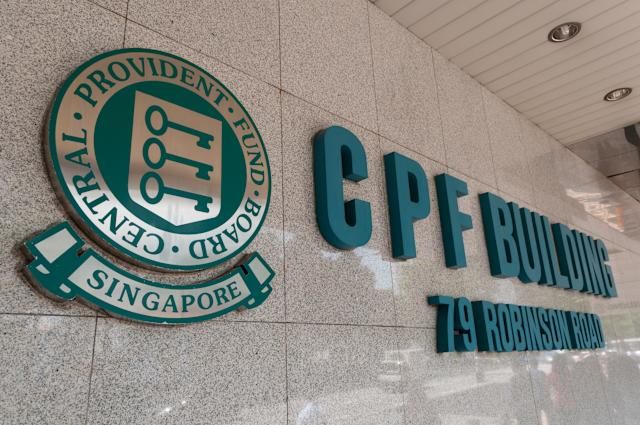
Many other countries restrict full withdrawal of retirement savings to protect retirees.
- Singapore through CPF Life provides mandatory lifetime monthly payments
- Germany only offers monthly pensions with no lump-sum withdrawal option
- Sweden adjusts payments based on life expectancy
- UK allows flexible withdrawals but requires financial advice first
This approach aims to ensure retirement savings do not run out too early.
In Singapore, a portion of savings is automatically converted into monthly income starting at age 65 — there is no option to withdraw everything.
In Germany, public pensions are paid monthly for life.
Sweden adjusts pension benefits according to the life expectancy of its citizens, so the system remains sustainable and fair.
Rajendaran suggests that Malaysia should mandate partial annuitisation — a portion of savings is converted into fixed income for basic needs, while a small portion can still be withdrawn.
He also proposes that EPF develop annuity-like products that guarantee lifetime income, in addition to strengthening financial education before retirement.
Lessons for Everyone
As Malaysians live longer with ever-shrinking savings, the lump-sum withdrawal model is clearly no longer sustainable.
Global experience shows that structured payment systems are not meant to restrict freedom, but to ensure retirees do not run out of money before their lives end.
The future of Malaysia's retirement system requires a shift in focus — from one-time withdrawals to guaranteed long-term income.
Source: NST Online
Prepare Before It's Too Late
There is nothing wrong with withdrawing your retirement money, even all at once. It is money earned through years of hard work. What matters is having the discipline and knowledge to manage it as wisely as possible throughout the rest of your life.
Imam Syafie said: "Whoever desires the world must have knowledge, whoever desires the hereafter must have knowledge, and whoever desires both must have knowledge."
It is our responsibility to learn the knowledge that can grow our money further, creating an income stream through dividend stock investments.

Time is Running Out
Retirement is approaching, living costs keep rising, yet many still have no investment portfolio that can truly generate consistent monthly income.
Without the right knowledge, stocks become merely a speculative instrument — not an asset for old age.
Through Pakejgold MaherSaham, we help you build a solid foundation of stock investment knowledge, so you can build a high-quality portfolio with the potential to generate long-term income as future financial preparation.
The real problem is not stocks — but reaching retirement age without a plan and skills.
After joining this Gold Package, you will not merely learn stock theory, but build the capability to construct a high-quality dividend stock portfolio in the US and Malaysian markets:
Able to build a high-quality dividend portfolio
You will know how to select and organise strong, sustainable dividend stocks, covering both Malaysian and US markets, with a focus on consistent cash flow, not just temporary dividends.
Generating income through two main sources: capital appreciation and dividends in USD
You will understand how to combine share price growth and dividend income to build medium to long-term investment income, including the advantage of exposure to the US Dollar as a global currency.
Skilled at reading and analysing company financial reports in depth
You will no longer be an investor afraid of numbers. You will be able to read, understand and evaluate financial statements, and identify "hidden treasures" — high-quality companies that are still undervalued by the market, whether in the US Market or Bursa Malaysia.
Proficient in making practical and easy-to-understand valuations
You will know how to make valuations concisely yet effectively, without getting trapped in complex comparative analysis or confusing yourself. Your focus will be on the true value of the business, not merely market opinion.
Wise in interpreting data, news and geopolitical risks to adjust your portfolio
You will be able to interpret economic data, news reports and geopolitical developments rationally, and use that information to adjust your portfolio strategically — not acting in panic or emotion.
Practising a businessman's mindset in stock investment
You will no longer see stocks as symbols on a chart, but as real business ownership. Every investment is evaluated from the perspective of business model, competitiveness, cash flow and long-term resilience.
Understanding and applying proven Value Investing principles
You will truly understand the concept of value investing — the approach that made Warren Buffett one of the most successful investors in the world — and know how to adapt it to current market realities.
Get it now — time is running out. For a 20% discount, enter coupon code GOLD20 — only for the fastest 10 people:
https://app.mahersaham.com/pakejgold/873

Start Your Investment Journey
Investment knowledge is the first step. But without action, knowledge will not yield results.
Learn the Basics:
Get our free ebook for a complete guide.
Start Investing:
To invest in Bursa Malaysia, open a CDS account now.
FAQ: EPF/KWSP Lump-Sum Withdrawal Risks
Why is withdrawing all your EPF savings at once considered risky?
When you withdraw your entire EPF savings in a lump sum, you lose the benefit of compounding returns and regular income distribution. Statistics show that 97% of EPF members who withdraw everything exhaust their savings within 3 to 5 years, leaving them financially vulnerable for the remainder of their retirement.
How much do most Malaysians have in their EPF when they retire?
The majority of Malaysians retire with EPF savings of less than RM50,000. At a spending rate of RM1,000 per month, this amount would only last approximately four years — far shorter than the 20+ years of retirement most people can expect given Malaysia's average life expectancy of 76 years.
What is the EPF Flexible Account (Account 3)?
Since the EPF restructuring in May 2024, contributions are divided into three accounts: the Retirement Account (75%), the Sejahtera Account (15%), and the Flexible Account (10%). The Flexible Account allows withdrawals at any time and is designed to help contributors during financial emergencies.
How do other countries protect retirees from running out of money?
Singapore mandates lifetime monthly payments through CPF Life, Germany only offers monthly pensions with no lump-sum option, Sweden adjusts pension payments based on life expectancy, and the UK requires financial advice before allowing flexible withdrawals. These systems ensure retirement savings last throughout a retiree's lifetime.
What is partial annuitisation and why is it recommended for Malaysia?
Partial annuitisation means converting a portion of your retirement savings into a guaranteed regular income stream for basic needs, while keeping a smaller portion available for withdrawal. Financial planners recommend this approach for Malaysia to prevent retirees from spending all their money too quickly while still allowing some financial flexibility.