Corteva Inc (CTVA)
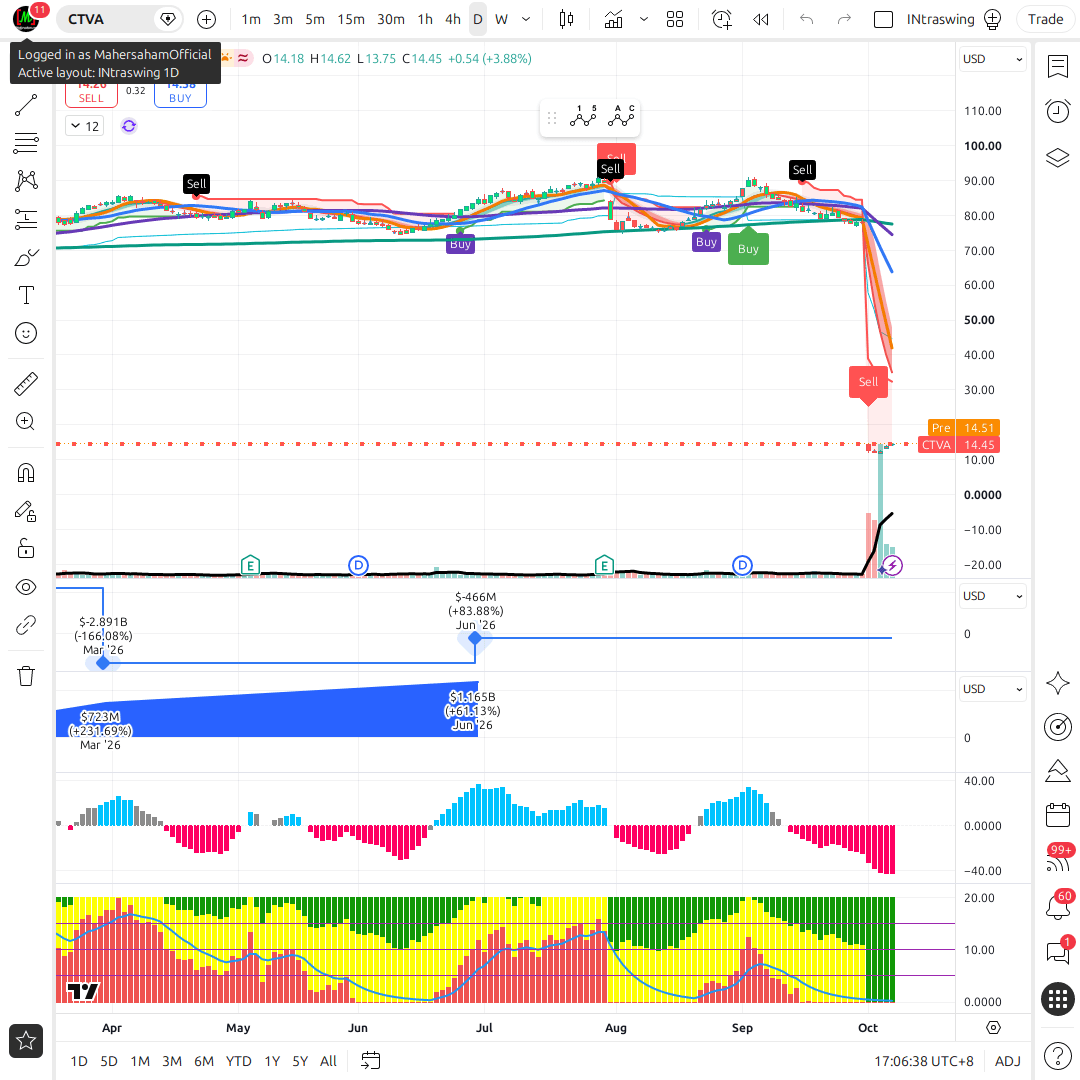
CTVA Chart
1D • NYSE
8 Oct, 09:06 am
150.1 KB
Company Profile
Corteva is splitting into TWO publicly-traded companies
This is not the Corteva you knew a year ago. On October 1, 2025, Corteva Inc's (CTVA) board of directors unanimously approved a major corporate separation: the company will split into TWO independent publicly-traded companies by Q4 2026. If you buy CTVA shares today, you are effectively buying a 'stub' that will convert into TWO separate share positions once the separation completes.
The first company, named Vylor Inc., will take over Corteva's Seed & Genetics business, including germplasm, gene editing, hybrid wheat, and biotechnology licensing. Vylor launches with more than 4,000 germplasm patents and more than 2,000 biotech patents, a formidable intellectual property portfolio in the global seed industry.
The second company is the remaining Corteva, which becomes a pure-play Crop Protection company covering agrochemicals, biologicals, and nature-based solutions.
What this means for CTVA shareholders today
The separation is targeted for completion in Q4 2026, with shares distributed via a tax-free pro-rata distribution to existing CTVA shareholders. In practice, anyone holding CTVA shares before the separation date will receive shares in BOTH new entities, Corteva (Crop Protection) AND Vylor (Seed & Genetics), without needing to take any additional action or trigger an immediate tax liability.
Leadership
Chuck Magro, Corteva's current CEO, will move to lead Vylor as CEO after separation. Meanwhile, the remaining Corteva (Crop Protection) will be led by an external hire, Luke Kissam, former Chairman, President and CEO of Albemarle. This signals that both new entities are considered substantial enough to each warrant a fully separate, dedicated leadership team.
Segment revenue mix
In full-year 2025, the Seed segment posted net sales of $9.90 billion (up 4% YoY) with operating EBITDA of $2.64 billion (up 19%), while the Crop Protection segment posted net sales of $7.50 billion (up 2%) with operating EBITDA of $1.35 billion (up 6%). This means the Seed business that will become Vylor is actually larger AND more profitable (higher EBITDA margin) than the Crop Protection segment that stays under the Corteva name.
Shariah compliance status
Per Zoya's screening, CTVA is confirmed SHARIAH COMPLIANT. The company's balance sheet carries low leverage (debt-to-equity of just 0.17x), consistent with Shariah compliant debt-ratio thresholds. However, the standalone Shariah status of Corteva and Vylor as SEPARATE entities post-split has not yet been formally confirmed, so investors should re-check the Shariah status of both new entities once the separation completes.
Exclusive Gold Members Content
Get in-depth analysis, target prices, and investment recommendations with Gold Members subscription.
How to Get Gold AccessCANSLIM Analysis
Exclusive Gold Members Content
Get in-depth analysis, target prices, and investment recommendations with Gold Members subscription.
How to Get Gold AccessFinancial Analysis
This section is being refreshed with the latest figures. Please check back soon.
Dividends
This section is being refreshed with the latest figures. Please check back soon.
Valuation
Exclusive Gold Members Content
Get in-depth analysis, target prices, and investment recommendations with Gold Members subscription.
How to Get Gold AccessPeer Comparison: Two Peer Sets for Two Future Companies
Exclusive Gold Members Content
Get in-depth analysis, target prices, and investment recommendations with Gold Members subscription.
How to Get Gold AccessRed Flags: What Could Make This Thesis Wrong
Exclusive Gold Members Content
Get in-depth analysis, target prices, and investment recommendations with Gold Members subscription.
How to Get Gold AccessCorteva Scorecard: 8 Evaluation Criteria
Exclusive Gold Members Content
Get in-depth analysis, target prices, and investment recommendations with Gold Members subscription.
How to Get Gold AccessCatalysts: What Could Move CTVA's Price
Exclusive Gold Members Content
Get in-depth analysis, target prices, and investment recommendations with Gold Members subscription.
How to Get Gold AccessConclusion: A Pre-Spinoff Unlock Play, Or an Already-Priced-In Premium?
Exclusive Gold Members Content
Get in-depth analysis, target prices, and investment recommendations with Gold Members subscription.
How to Get Gold AccessRelated Thematic Reports
Investment theme reports featuring Corteva Inc
Food & Fertilizer Sector: US-Iran War Impact, Soaring Fertilizer Prices & USD Strength — Winners and Losers
Deep analysis of the US-Iran war's impact on food and fertilizer sectors — from the Strait of Hormuz to Malaysian palm oil estates. Who wins and who loses among Bursa Malaysia and US food stocks?
Fertilizer Supply Chain 2026: Opportunities & Risks in Bursa Malaysia & US Markets
The global fertilizer industry faces an unprecedented supply crisis in 2026 with urea prices surging 128% due to geopolitical disruptions in the Middle East. Bursa Malaysia's supply chain—from PETRONAS CHEMICALS to plantation operators and distributors—faces significant exposure. Investors must differentiate between pure-play producers (beneficiaries) and end-users (margin pressured).
Related Stocks
Other stocks in the Agricultural Chemicals sector