7 Wolf of Wall Street Lessons on Stock Fraud and Greedy Brokers
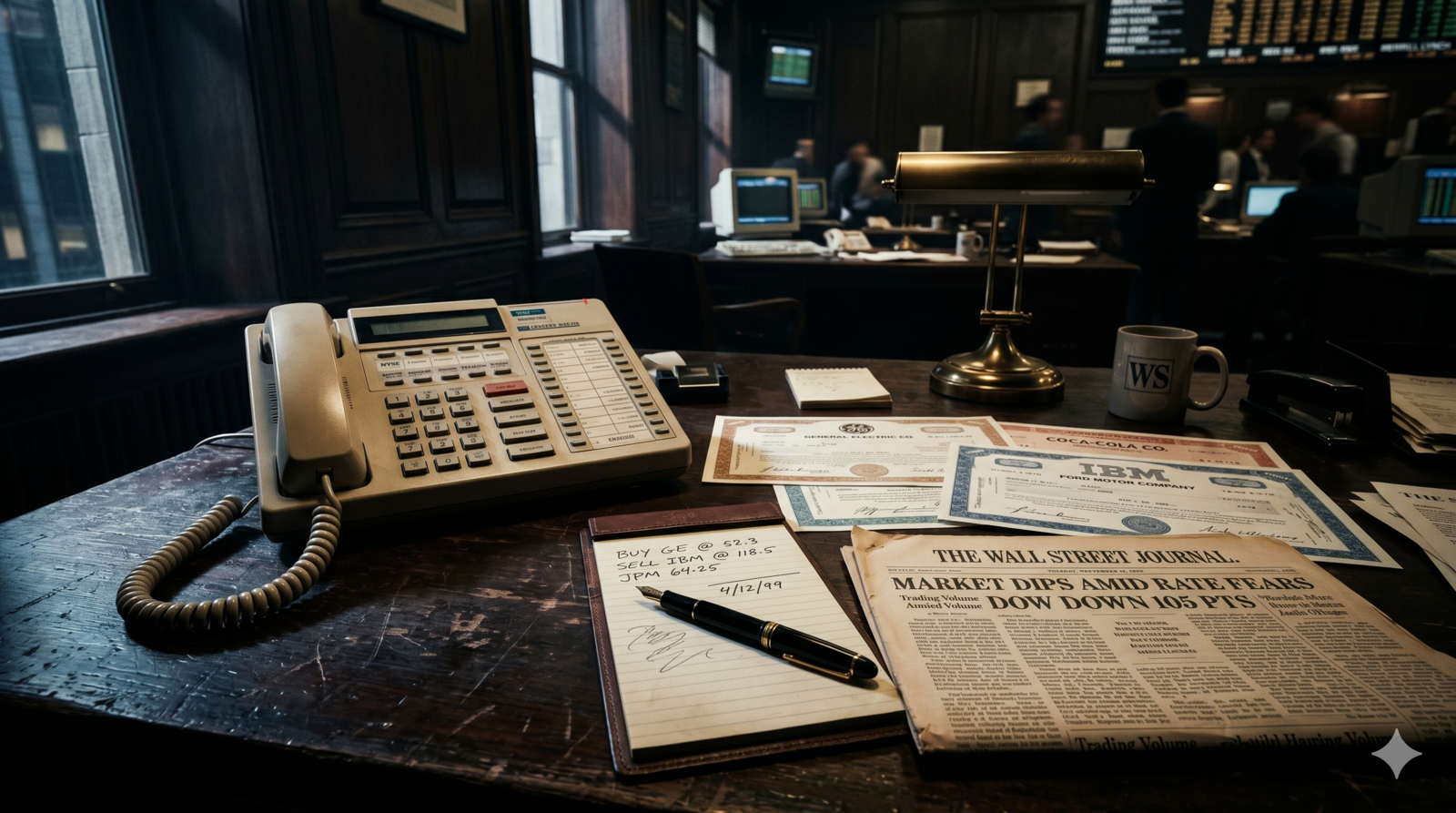
There are many films about stocks, but none portray the culture of broker greed as clearly as The Wolf of Wall Street (2013). Directed by Martin Scorsese and starring Leonardo DiCaprio, the film is based on the memoir of Jordan Belfort - the former financial criminal who ran pump-and-dump schemes worth hundreds of millions of dollars in the 1990s.
For some, the film looks like glorification - big mansions, luxury yachts, wild parties. But if you watch it carefully, it's actually a textbook on how greedy brokers cheat ordinary investors - and why so many professional-class people willingly become victims.
For Malaysian investors, the lessons from this film are highly relevant. The same scheme Belfort ran at Stratton Oakmont still exists today - but the packaging has changed. It's no longer "boiler rooms" in big offices with 200 brokers cold-calling. Today, it happens in Telegram groups, WhatsApp groups, and Facebook pages promoting "hot stocks" to pump up prices.
In this article, I'll lay out the 7 main lessons from Wolf of Wall Street - and how each one can be applied to protect yourself on Bursa Malaysia.
Short Answer: What Are the Main Lessons from Wolf of Wall Street?
The main lesson from Wolf of Wall Street is: brokers who promise quick profits usually cheat. Stratton Oakmont used pump-and-dump - buying stocks at low prices first, hyping them through broker sales calls, then dumping after retail investors had piled in. The result: brokers got rich, retail investors lost. The key lesson for investors: stay away from any "secret tips", verify all stock promotions through official sources like the Securities Commission Malaysia, and don't let strangers control your investment decisions.
Lesson #1: The Real Story of Stratton Oakmont
Jordan Belfort opened Stratton Oakmont in 1989 in Long Island, New York. At first, the firm looked like an ordinary broker - selling stocks, collecting commissions. But the way Belfort sold stocks was very different.
Stratton Oakmont focused on microcap stocks (small market-cap stocks, usually under USD300 million). These stocks:
- Were priced low (often under USD5)
- Had low trading volume - easy to manipulate
- Had little analyst coverage
- Retail investors had limited research capability
Belfort and his team would:
- Buy a large quantity of these stocks first at low prices
- Call investors with aggressive scripts ("this stock will go up 3x in 30 days!")
- Build hype through hundreds of brokers cold-calling 200+ investors a day
- Pump the price to many times the original level
- Dump (sell) their holdings at the peak price
- Retail investors were left holding stocks that later collapsed back to the original price
According to the Securities Commission Malaysia, the same methods exist on Bursa Malaysia - except Belfort's "boiler room" has become Telegram groups. Perpetrators accumulate the stock first, then spread positive sentiment through blogs, forums, or social media to create interest and drive up the price.
Lesson #2: They Targeted Ordinary Investors, Not the Wealthy
One of the most insightful scenes in the film is when Belfort tells his brokers: "We target the wealthiest 1%" - but they actually targeted REGULAR people with modest savings.
Why? Because:
- The truly wealthy have financial advisors, lawyers, and accountants. They won't entertain random sales calls.
- Ordinary people with USD20,000-100,000 in savings are easier to persuade. They don't have a professional team to verify.
- Many small victims are more profitable than one big victim - because they don't attract regulators' attention early.
In Malaysia, the target is the same: not crazy rich Asians, but school teachers, retired aunties, young doctors with new savings. They're not familiar with market manipulation techniques, and often feel "there's an opportunity to catch up with people who got in earlier".
One case investigated by the SC on Bursa Malaysia involved a blog called 'Bonescythe Stock Watch' that published misleading and deceptive statements and forecasts - an offence under Section 178 of the Capital Markets and Services Act 2007 (CMSA).
Lesson #3: Pressure Sales = Red Flag #1
An iconic scene in Wolf of Wall Street: Belfort teaching new brokers "the art of the sale". He shows how to never take "no" for an answer. Investors must be called back, pushed, emotionally manipulated, until they cave.
How typical pressure sales work:
- "This stock is only available to a select few investors"
- "If you don't act now, you'll miss out"
- "I have an exclusive IPO that will double in 3 months"
- "Trust me - I've given my clients 300% return this year"
- "Don't think too long. Buy now or you won't get another chance"
Every one of these phrases is a major red flag. Legitimate brokers on Bursa Malaysia won't randomly call you and pressure you to buy specific stocks. They won't promise a specific return (that's illegal under SC rules).
If someone calls or messages you with phrases like these - block them immediately. Don't entertain. Don't get defensive with "well, let me just hear them out". That's their strategy - once you start listening, they can manipulate.
Lesson #4: "Don't Sell - Buy More!" Is a Trick
Another important scene: when Stratton Oakmont investors wanted to sell stocks that had risen 200%, brokers would say "Don't sell! Buy more! This stock will go up 1000%!"
This strategy keeps retail investors from exiting at high prices - because if many sell, the price drops and Belfort's dump plan is disrupted. Brokers needed to keep investors invested to pump the price higher, so Stratton's holdings could be sold at peak.
The first lesson Peter Lynch taught (as I covered in my summary of One Up on Wall Street) - don't let others decide when you sell or buy. That's your decision based on your fundamental analysis.
If your broker or "guru" says "don't sell, buy more" even when fundamentals show over-valued - their net isn't for your profit. They may have another agenda.
Lesson #5: Lavish Lifestyle = Distraction
One of the subtlest tricks in Wolf of Wall Street is how Belfort uses his lavish lifestyle - big mansion, yacht, luxury cars, wild parties - as "social proof" that his methods work.
The logic: if Belfort is that rich from investing, then the investments he recommends must work. Wrong. The source of Belfort's wealth was NOT from successful investing. It came from high commissions on fraud, plus dumping holdings at peak prices he himself pumped.
In today's era, the pattern is the same: you see Instagram "stock gurus" with rented Lamborghinis, Rolex watches (fake or borrowed), and luxury Airbnb mansions. This lifestyle is a marketing tool - not proof of investing skill.
Real investors like Warren Buffett still live in a modest house he bought in 1958 for USD31,500. He drives a regular car and eats at McDonald's. Those who are real don't need to show off.
Lesson #6: The SEC Eventually Caught Belfort (But After Years)
In the film, you see the FBI begin investigating Belfort early in the story - but it took YEARS before he was finally imprisoned. Why? Several factors:
- Investors are embarrassed to report - they feel stupid for being scammed
- Belfort used offshore accounts - hard to track
- Strong lobby & legal team - he paid expensive lawyers
- Enforcement system is slow - the SEC needs solid evidence
The lesson for Malaysian investors: DON'T wait for the SC to catch the perpetrators. By the time perpetrators are caught, your money is gone. The best strategy is to avoid from the start - don't enter schemes that look suspicious.
If you've already been involved and suspect fraud, report immediately to the Securities Commission Malaysia or Bursa Malaysia. Report even if you're embarrassed or feel the loss is small - your report can prevent others from becoming victims.
Lesson #7: Belfort Is Now "Reformed" - But Be Careful
After getting out of prison, Jordan Belfort now "sells self-help" - he writes books, gives motivational talks, and promotes "ethical investing". Many new investors fall for him because they feel he's changed.
Reality: Belfort still owes USD110 million in restitution to his former victims, but he's only paid a small portion. According to media reports, he still gives "stock tips" in interviews and podcasts - and pump-and-dump still exists today, he says.
For Malaysian retail investors: don't take advice from former financial criminals, even if they claim to have changed. Better sources of advice: - Books from truly successful investors (Buffett, Munger, Lynch, Bogle) - Official sources like Bursa Malaysia and the SC - Fund managers who are transparent with audited track records
Application in Bursa Malaysia: Modern Boiler Rooms
The Stratton Oakmont pump-and-dump model isn't dead - it has evolved. Today, "boiler rooms" have become:
- "Hot stock" Telegram groups - 5,000-50,000 members, with admins recommending stocks they themselves already hold
- "Stock tip" Facebook pages - viral content about stocks that will go up
- "Stock guru" podcasts/YouTube - free content to attract followers, then upsell signal services
- WhatsApp broadcasts - friends sharing "inside info" about stock X
- Investment Instagram influencers - lifestyle marketing to justify their "skills"
Each can be legitimate, and can also be fraud. How do you differentiate? Ask these questions:
- Is this person rushing to recruit more investors, or teaching methodology?
- Does the promoted stock have a track record of strong fundamentals?
- Does the promoter have an SC licence?
- Does the promoter disclose that they themselves hold the stock?
- Are there promises of specific returns (big red flag)?
For a more systematic approach, read my article on 6 signs of a goreng stock promoted through fake news and how to use i3investor sentiment without becoming a pump-and-dump victim.
Real Case: Victims in Malaysia
In 2025, five Malaysians were charged in the United States for involvement in a USD214 million (around RM950 million) pump-and-dump investment fraud scheme - along with two Taiwanese nationals. This scheme used social media platforms to pump stock prices, then dumped on retail investors.
The size of the losses in this case is comparable to Stratton Oakmont. The difference: today, brokers don't need to sit in offices with 200 phones - they can run the same operation from a laptop with social media accounts.
What's the lesson for you? These schemes are getting more sophisticated, but the basic principles haven't changed. Anyone promising high quick returns, with pressure to decide quickly, and promoting stocks without a fundamental track record - be careful.
What Do Smart Investors Do?
When you see an "attractive" investment opportunity, follow this checklist:
- Check the licence - is the promoter SC-licensed? List of licensed brokers here
- Verify fundamentals - read the income statement, balance sheet, and recent financials of the company
- Get a second opinion - don't rely on a single source
- Start small - if you want to test an idea, start with an amount you can afford to lose
- Set a stop loss - decide early when you'll exit if wrong
- Discipline - if emotion starts to take over, step back first
And most importantly: use legitimate licensed brokers with an official CDS account. This protects you under SC and Bursa Malaysia regulations.
FAQ: Common Questions About Wolf of Wall Street
Q: Did the story in Wolf of Wall Street really happen? A: Yes, much of it is based on Jordan Belfort's memoir. Some scenes are exaggerated for the film, but the structure of the Stratton Oakmont pump-and-dump scheme is accurate based on Belfort's criminal conviction.
Q: How long was Jordan Belfort imprisoned? A: 22 months out of a 4-year sentence (he got early release for being a witness for prosecutors). Many of his victims feel the sentence was too lenient.
Q: Does Stratton Oakmont still exist? A: No. The firm was shut down by regulators in 1996 after an SEC investigation. Belfort and his associates were convicted.
Q: Does pump-and-dump happen on Bursa Malaysia? A: Yes. The SC has issued several official warnings in 2018 about schemes run through blogs, forums, and social media. Target stocks are usually low-priced stocks with low trading volume.
Q: What's the difference between a legitimate broker and a greedy broker? A: Legitimate brokers are SC-licensed, have transparent disclosure, don't promise specific returns, and operate within Bursa Malaysia regulations. Greedy brokers will pressure you, offer "secret tips", and promote certain stocks for high commissions or because they themselves already hold.
Q: How do I tell if a "stock guru" is legitimate or a fraud? A: Ask: do they have an SC licence? Do they have an audited track record? Do they disclose holding the stock themselves? Do they promise specific returns (red flag)? Pressure to buy fast (red flag)? Do they teach methodology or just give "tips"? If many answers lean negative, be careful.
Q: Can I sue if I become a pump-and-dump victim? A: You can, through the Securities Commission or a lawyer. But in most cases, recovering money is hard - perpetrators usually hide assets offshore. Prevention is far better than recovery.
Q: Is Wolf of Wall Street worth watching? A: Yes, as a lesson. But watch with a critical lens - don't take Belfort's lifestyle as a goal. Take the lessons about manipulation tactics he used, and recognise them in the modern investment world.
Conclusion
Wolf of Wall Street is not a film about how to get rich. It's a mirror showing how many ordinary investors become victims of greedy brokers because they don't recognise the red flags. Pump-and-dump schemes are still alive today - just the packaging has changed from boiler rooms to Telegram groups. The basic principles remain the same: if someone promises quick profits with sales pressure, you're most likely not the beneficiary, but the victim.
Before you can avoid pump-and-dump schemes and greedy brokers, you need market access through a legitimate licensed broker.
Open a CDS Account to invest in Bursa Malaysia and also foreign stocks like the US and Hong Kong - through a broker licensed by the SC and protected by official regulations.
For a more systematic foundation on stock investing (not secret tips), download our Stock Market Basics Ebook for free before you begin.
Further Reading
- Pump and Dump on Bursa Malaysia: 6 Signs of a 'Goreng' Stock Promoted Through Fake News
- i3investor & Telegram Sentiment: How to Use 'Hot Stock' Chatter Without Becoming a Pump & Dump Victim
- Pro Scammer Strikes, RM60K Vanishes
- One Up on Wall Street Summary: What Peter Lynch's Classic Teaches Malaysian Investors
- PE Ratio: How to Tell If a Stock Is Expensive or Cheap by Sector in Malaysia