What Is BESS? TNB Just Launched Malaysia's First 100MW 'Energy Bank' in Terengganu

On 18 May 2026, Tenaga Nasional Berhad set another national record by officially launching BESS Santong 100MW/400MWh in Dungun, Terengganu - the first battery energy storage system in Malaysia connected directly to the national grid. The inauguration ceremony was performed by the Deputy Prime Minister and Minister of Energy Transition and Water Transformation (PETRA), Datuk Amar Fadillah Yusof.
But what exactly is BESS, and why is this launch important not only to electricity users in the East Coast, but also to investors in Tenaga Nasional Bhd shares on Bursa Malaysia? This article explains the technology, dissects the implications for Malaysia's energy landscape, and what it means for the long-term investment thesis in Tenaga stock.
Short Answer
BESS (Battery Energy Storage System) is a large-scale electrical energy storage system that functions like an "energy bank" - it stores electricity from renewable sources (solar, wind, hydro) when supply is surplus, and releases it back to the grid when demand is high or supply is disrupted. TNB's BESS Santong has a capacity of 100 megawatts / 400 megawatt-hours, enough to support the electricity needs of approximately 40,000 households in the East Coast. It uses liquid-cooled and grid-forming technology - the latest generation that enables large-scale renewable energy integration.
What Is BESS (Battery Energy Storage System)?
BESS is an industrial-scale battery - imagine hundreds of containers filled with lithium-ion battery modules (or other chemistries), combined with inverters, management systems, and sophisticated grid controls. Unlike phone or EV batteries that store energy for one device, BESS stores energy for the entire national grid.
Main BESS components:
- Battery modules: Most use lithium iron phosphate (LFP) or lithium nickel manganese cobalt (NMC) for the balance of cost, energy density and safety
- Power Conversion System (PCS): Inverter that converts battery DC to grid AC (or vice versa during charging)
- Battery Management System (BMS): Monitors each battery cell for safety and lifespan
- Cooling system: BESS Santong uses liquid cooling which is more efficient than conventional air cooling
- Grid interface system: Controls for interacting with the grid - including grid-forming technology that allows BESS to act as a grid stabilizer
Two key metrics:
- MW (megawatt): How much power can be released at one time (power)
- MWh (megawatt-hour): How long the energy can be released (capacity)
BESS Santong 100MW/400MWh means it can deliver 100MW output for 4 consecutive hours before needing recharge. For context, this is equivalent to a small power plant, but with the ability to be activated in milliseconds - much faster than conventional power plants.
Why Is BESS Important? The Market Problems It Solves
Before we look at the details of BESS Santong, understand the core problems BESS solves. This will help you appreciate why it's a game-changer.
Problem #1: Renewable energy is inconsistent
Solar panels don't generate anything at night or on cloudy days. Wind turbines depend on wind. Hydro depends on rain. But electricity demand doesn't wait for weather - peak demand is usually 7-10 PM, when solar has already stopped.
Problem #2: Grid load can't be fully predicted
ACs turn on simultaneously on hot days, factories start operations in the morning, thunderstorms can disrupt production. Without buffer, the grid has to be over-engineered to handle peaks - costly.
Problem #3: Conventional power plants are slow
Natural gas plants take 10-15 minutes to start. Coal plants take longer. This means grid operators need to estimate demand far in advance, and often dispatch excess capacity that isn't actually used.
BESS solves all three problems with ONE technology - and that's why the entire world is racing to build them.
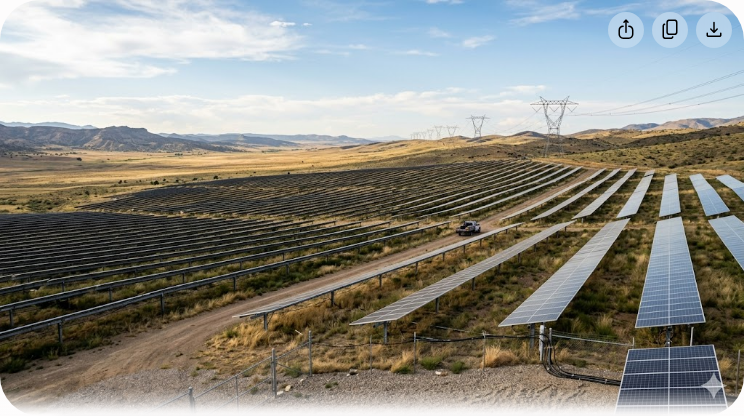
BESS Santong Specifications and What Makes It Special
Full specifications of the TNB-launched BESS Santong:
- Capacity: 100 megawatts / 400 megawatt-hours
- Location: PMU 132/33kV Santong BESS, Paka, Dungun, Terengganu
- Construction period: 309 days from start date to commissioning
- Cooling technology: Liquid-cooled
- Grid capability: Grid-forming
- Support capacity: Equivalent to ~40,000 households in the East Coast
- Status: First BESS system in Malaysia connected to the grid
Two most important specifications to appreciate:
Liquid-cooled vs Air-cooled
Lithium-ion batteries generate heat during charge/discharge. Air cooling (fans) is the older standard - cheaper but less efficient. Liquid cooling uses coolant fluid that flows through pipes around the battery modules - more compact, more efficient, and extends battery lifespan. This is the modern standard for utility-scale BESS.
Grid-forming vs Grid-following
This is the most revolutionary technology. Older BESS were "grid-following" - they could only inject power when the grid was already stable. Grid-forming BESS can create its own voltage reference - meaning it can "start" the grid after a blackout (black start capability) and help integrate renewable energy on a larger scale without grid instability risk.
In the words of TNB President/CEO Datuk Ir. Ts. Shamsul Ahmad as quoted in TNB's press release:
"BESS Santong can function as an 'energy bank' that stores electricity from renewable sources like large-scale solar farms and floating hydro hybrid solar systems, before being channelled back to the grid when needed."
The 309-day construction period (less than a year) also highlights TNB's execution capability - energy infrastructure projects in Southeast Asia typically take much longer.
Context: NETR and Malaysia's Green Energy Strategy
BESS Santong is not an isolated project - it's part of the National Energy Transition Roadmap (NETR) launched by the government in 2023. NETR targets several key milestones:
- 70% generation capacity from renewable energy by 2050 (currently around 25%)
- Significant reduction in carbon emissions
- Expansion of BESS capacity up to tens of GWh by 2035
- Integration of large-scale solar and floating hydro
To achieve these goals, Malaysia needs massive energy storage infrastructure. BESS Santong is the proof-of-concept and first technology that will be followed by many more BESS in years to come.
The Energy Commission and Sustainable Energy Development Authority (SEDA) also participated in the inauguration ceremony - signalling the government's seriousness about this initiative.
What Does This Mean for Tenaga Stock (TENAGA) Investors?
This is the angle most relevant to mahersaham.com readers. As an investor, what are the implications?
1. Tenaga is the main NETR conduit
TNB owns and operates the national grid in Peninsular Malaysia. Every energy transition project - whether solar, hydro, or BESS - needs to be connected to the TNB grid. This makes Tenaga Nasional Bhd a monopoly player in the country's energy transition infrastructure.
2. Rate-base growth from BESS capex
Every new infrastructure investment TNB makes is added to the "rate base" - the pool of assets that generate a guaranteed return from the government. The more BESS built, the larger the rate base, the higher TNB's long-term earnings.
3. Revenue diversification
TNB's traditional revenue depends on conventional electricity sales. With BESS and renewable energy, TNB diversifies its revenue portfolio - including ancillary services like frequency regulation, spinning reserve, and grid stability. These typically carry higher margins.
4. Capacity factor improvement
Solar assets in Malaysia have a capacity factor of only ~16-18% (only operating during daylight). With BESS, effective exposure to solar can be maximised to 24/7 - effectively making solar project ROI much more attractive.
5. International assets as lever
TNB already has 3.3GW of renewable energy capacity in Peninsular Malaysia (including 2.5GW of large-scale hydro) and 1.3GW in the UK, Ireland, Australia, and Turkiye. Experience from these more mature markets can be transferred to Malaysia.
For in-depth fundamental analysis of the valuation and prospects of Tenaga Nasional Bhd on Bursa Malaysia, including financial analysis, dividend track record, and peer comparison, visit our stock analysis page.
Risks and Challenges Investors Should Understand
But don't be too bullish without considering real risks:
1. Large capex requirement
Building BESS isn't cheap. Utility-scale BESS typically costs USD 300-500 per kWh. For BESS Santong's 400MWh = potential RM560M-RM950M. TNB needs significant funding - either debt or additional equity.
2. Regulated returns
TNB's rate-base returns are set by the government (Incentive-Based Regulation or IBR). While stable, it's not explosive. EPS growth is slow but consistent.
3. Technology risk
BESS is a new technology for Malaysia. Risks include: battery degradation faster than expected, fires (BESS incidents have occurred in South Korea, US, and Australia), and effectiveness of grid-forming at larger scales.
4. Political and tariff risk
Electricity pricing policy and tariff incentives can change. Subsidy grants for BESS projects may not last forever.
5. Competition from IPPs
It's not just TNB building BESS. Independent Power Producers (IPP) and Independent Power Suppliers (IPS) are also racing. More competition can compress margins over the long term.
How Can Investors Take Position in This Trend?
Three main approaches:
Approach 1: Buy TENAGA shares directly
Direct exposure to BESS and NETR thesis. Stable dividend (5-6% yield), regulated growth, defensive stock. Suitable for long-term investors.
Approach 2: REIT or utility ETF
For broader diversification, utility ETFs or infrastructure REITs with exposure to energy assets can deliver more consistent returns with lower volatility.
Approach 3: Secondary beneficiaries
Companies that supply components to BESS - solar contractors, battery suppliers, EPC (Engineering, Procurement, Construction) companies. Higher risk but also higher upside potential.
For a portfolio diversification strategy appropriate for your decade, see Stock Portfolio By Age.
FAQ
1. How long can BESS Santong generate electricity?
BESS Santong 100MW/400MWh can deliver 100MW output for 4 consecutive hours before needing recharge. But in practice, it's typically not discharged fully at once - instead used to balance grid fluctuations throughout the day.
2. Is BESS suitable for all types of grids?
Yes, but most effective for grids with lots of renewable energy (especially solar and wind). For Malaysia, which still depends on gas and coal, BESS will become more critical as renewable percentages increase.
3. What's the cost of electricity from BESS?
The Levelized Cost of Storage (LCOS) for utility-scale BESS in 2026 is estimated at USD 100-150/MWh. Although higher than conventional generation, BESS provides additional value in the form of stability and ancillary services that can't be measured in basic LCOS.
4. Are there environmental challenges with BESS?
Yes. Lithium and cobalt extraction can cause environmental impact. After end-of-life (~15-20 years), batteries need to be properly recycled. But the overall carbon footprint of BESS over the long term remains far lower than gas or coal.
5. When will Tenaga build more BESS?
TNB has stated a commitment to expanding BESS in the coming years as part of NETR. There's no specific announcement for the next project, but more BESS will likely be launched in the next 2-3 years.
6. Is TENAGA stock a good investment for beginners?
Tenaga Nasional is a blue-chip stock with a consistent dividend record and exposure to the long-term growth thesis (NETR). Suitable for beginners who want a defensive stock with growth potential.
7. What's the difference between BESS and a regular power plant?
Regular power plants generate new electricity (from gas, coal, or hydro). BESS does NOT generate electricity - it ONLY stores already-generated electricity, and releases it back when needed. So BESS doesn't replace power plants - it complements them.
8. Will this lower my electricity bill?
Not directly in the short term. But long-term, BESS helps the grid operate more efficiently, reduces the need for new power plants, and enables integration of cheaper renewable energy. The benefits will filter through to consumers over 5-10 years.
Conclusion
The launch of BESS Santong 100MW/400MWh by TNB is more than just technical news - it's a major milestone in the country's energy transition. As the first BESS connected to Malaysia's grid, it sets the template for dozens more similar projects to come.
For investors, it reinforces the thesis that Tenaga Nasional Bhd is not just a traditional utility company - it's the infrastructure platform for Malaysia's transition to a renewable energy future.
To build long-term exposure to Malaysia's energy transition theme through stocks like Tenaga, the first step is opening a suitable investment account.
To start investing in Tenaga and other energy infrastructure stocks on Bursa Malaysia, open a CDS account with us - an account that lets you invest in Bursa Malaysia as well as overseas markets like the US and Hong Kong.
For the fundamentals of selecting infrastructure and utility stocks, download our Free Stock Investing Basics Ebook.
Further Reading
- Tenaga Nasional Berhad (TNB) Stock Analysis - In-Depth Research
- Stock Portfolio By Age: How to Structure Investments in Your 20s, 30s & 40s on Bursa Malaysia
- Shariah vs Conventional Investments: The Real Difference Across Stocks, Unit Trusts, EPF & Takaful
- Geopolitik Timur Tengah: Kesan kepada Pasaran Minyak Dunia dan Prestasi Saham Sektor Tenaga
- REITs Malaysia: How to Own Property on Bursa Malaysia