GDP 5.8%, Inflation 1.9% - Why Malaysia's Economic Fundamentals Remain Resilient

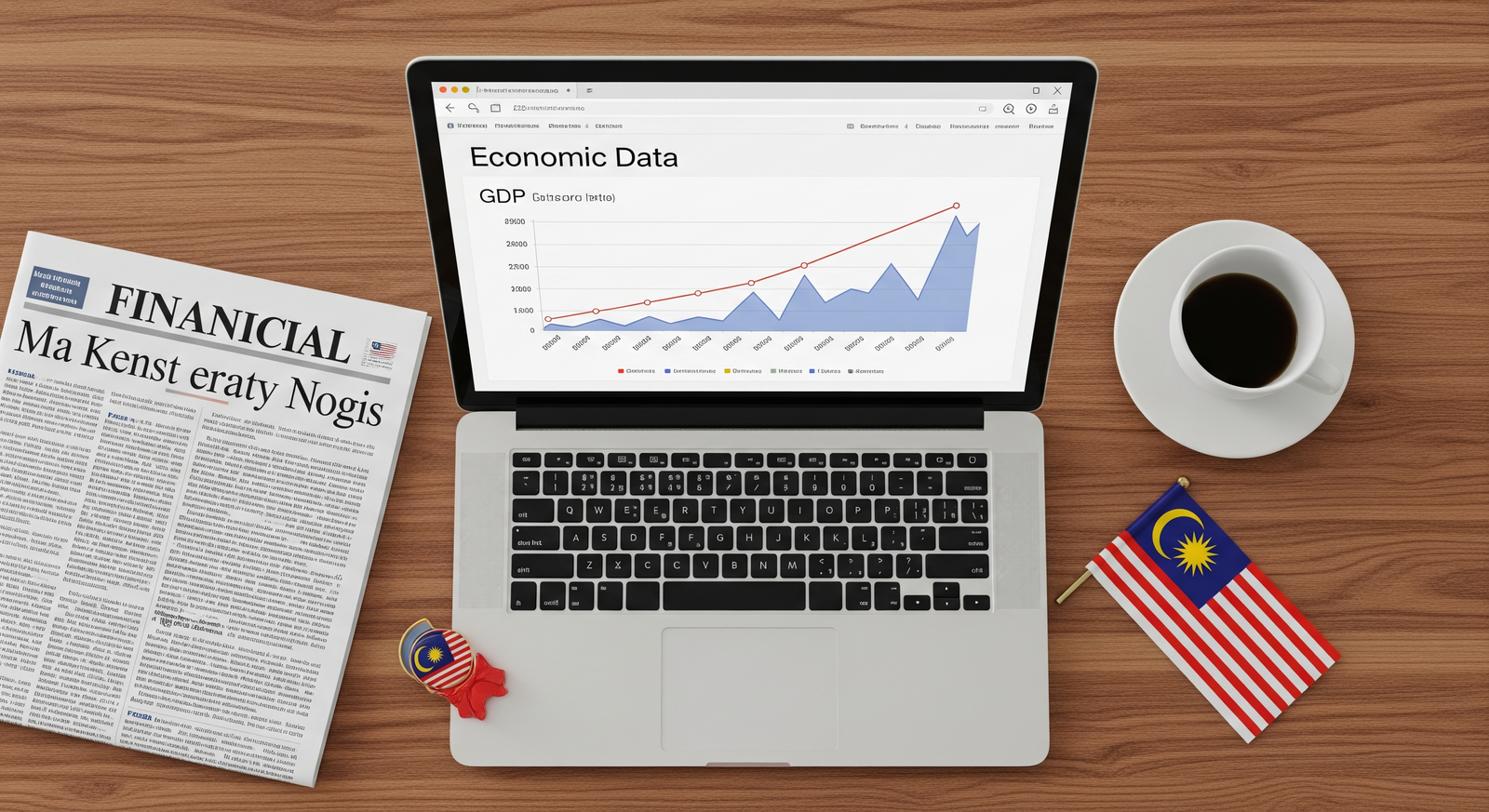
While many countries struggle with high inflation, ballooning debt, and global trade uncertainty, Malaysia has posted impressive economic results. The nation's GDP surged 5.8% in Q2 2026, exceeding analyst expectations, while inflation remains at a moderate 1.9%.
The question is - do these numbers truly reflect real economic strength, or are they just figures on paper? This article examines in depth the factors that keep Malaysia's economic fundamentals resilient, and what it means for you as an investor and Malaysian citizen.
Malaysia's GDP Exceeds Expectations for Two Consecutive Quarters
Malaysia's economy has recorded above-expectation growth for two consecutive quarters. According to the Ministry of Finance, GDP grew 5.4% in Q1 2026 - surpassing the Bloomberg median forecast of 5.3%.
An even bigger surprise came in Q2 2026, when the economy surged 5.8%, far exceeding the market expectation of 5.2%. Overall, first-half 2026 growth stood at 5.6% - among the highest in the ASEAN region.
What drove this growth?
- Strong domestic demand (5.2%) - household spending remained stable, supported by a robust labor market
- E&E export recovery - the upswing in the global semiconductor cycle boosted Malaysia's electronics sector
- Data center investment - massive investments in data center infrastructure and artificial intelligence (AI)
- Targeted public spending - implementation of Phase 2 of SSPA and BKK financial assistance for civil servants
Importantly, this growth was not driven by a single sector alone but was broad-based - indicating healthy and diversified economic fundamentals. To understand how GDP is calculated and what it actually measures, read our explainer on what GDP is.
Inflation Under Control - Malaysia Among the Lowest in the Region
Unlike developed nations such as the United States and United Kingdom, which once hit 8-10% inflation, Malaysia has managed to keep inflation at very manageable levels.
- Q1 2026: 1.6% - stable throughout the quarter
- April 2026: 1.9% - slightly higher due to transportation and RON97 petrol prices
- BNM 2026 forecast: 1.5% - 2.5% - still within a comfortable range
Low inflation means people's purchasing power is not severely affected. Prices are rising, but at a manageable rate. This contrasts with scenarios in Argentina (200%+ inflation) or Turkey (60%+ inflation) where citizens face extreme cost-of-living pressures.
Key factors helping control Malaysia's inflation include targeted fuel subsidies through the BUDI95 program for RON95 and BUDI Diesel, as well as the Overnight Policy Rate (OPR) remaining stable at 2.75% since mid-2024. For further details on how inflation in Malaysia affects investors, refer to our earlier article.
FDI RM22.8 Billion - Foreign Investors Are Confident in Malaysia
One of the clearest indicators of confidence in an economy is Foreign Direct Investment (FDI) inflows. In Q1 2026, Malaysia received net FDI inflows of RM22.8 billion - a very encouraging figure.
According to HSBC via Bernama, Malaysia's 2026 economy remains resilient driven by FDI and strong infrastructure investment. Factors attracting foreign investors include:
- Data center ecosystem: Tech giants like Microsoft, Google, and Amazon are investing billions in data centers in Malaysia
- Competitive operating costs: Compared to Singapore or Australia, labor and land costs in Malaysia are much more affordable
- Strategic location: Malaysia sits at the heart of Asia Pacific trade routes
- Relative political stability: The unity government under PM Anwar provides consistent policy confidence
High FDI not only creates job opportunities but also brings new technology and increases the nation's production capacity - ultimately benefiting Bursa Malaysia investors.
Ringgit Among Asia's Best-Performing Currencies
The Malaysian ringgit has emerged as one of Asia's best-performing currencies against the US dollar. After experiencing pressure in 2023-2024, the ringgit has shown an encouraging recovery.
Several factors contributed to the ringgit's strengthening:
- Income repatriation policy: The government directed government-linked companies (GLCs) to bring home their dollar earnings, increasing demand for ringgit
- Strong economic fundamentals: High GDP and low inflation attract foreign capital inflows
- Interest rate differential: Expected US Fed rate cuts are narrowing the gap with Malaysia's OPR
- Positive investor sentiment: Malaysia's stable credit ratings from international rating agencies
A stronger ringgit means cheaper imports (reducing inflationary pressure), lighter foreign debt burden, and better purchasing power for citizens buying imported goods. However, an excessively strong ringgit can hurt exporters - this is the balance Bank Negara needs to maintain.
Government Measures - From Targeted Subsidies to SME Financing
The government has not been idle in facing global cost pressures. Several important measures have been taken to protect citizens and businesses:
Targeted Fuel Subsidies
The BUDI MADANI RON95 (BUDI95) and BUDI Diesel programs replace blanket subsidies that burdened government coffers. Subsidies are now channeled directly to those in need, reducing waste and ensuring B40 citizens are not burdened by rising transportation costs.
Support for SMEs
According to Malaysia MADANI, as of 14 May 2026, the government has channeled RM15 billion in financing to Micro, Small and Medium Enterprises (MSMEs) through microfinancing, business loans, and guarantees. MSMEs are the backbone of Malaysia's economy - contributing over 38% to GDP and employing the majority of the nation's workforce.
Healthy Labor Market
Malaysia's unemployment rate dropped to 2.9% - the lowest in a decade. The implementation of Phase 2 of the Public Service Salary System (SSPA), Special Financial Assistance (BKK), and the Rahmah Basic Assistance (SARA) program help maintain purchasing power and consumer sentiment. To understand how population and productivity factors affect the economy, read our article on population, economy and per capita income.
Risks and Challenges - Not Everything Is Rosy
Despite strong economic fundamentals, Malaysia is not without risks. Investors need to be aware of several challenges that still exist:
- US-China trade war: Malaysia, as an open trading hub, is highly exposed to global supply chain disruptions. Escalating tariffs between major powers can hurt exports
- Middle East geopolitical tensions: Conflicts in West Asia raise risks to energy prices and disrupt trade routes
- Rising construction costs: According to Berita Harian, construction costs have risen 12.59%, which could affect mega projects and construction company margins
- Data center FDI dependency: While data center investments are beneficial, over-reliance on a single FDI sector can create concentration risk
- Fiscal deficit persists: Malaysia still operates in fiscal deficit - though shrinking, it limits the government's fiscal room to act if a recession occurs
The reality is that resilient economic fundamentals don't mean zero risk - they mean the country has sufficient buffers to absorb external shocks. Smart investors will monitor both opportunities and risks simultaneously.
What Does All This Mean for Bursa Malaysia Investors?
This robust economic data sends several important signals for investors:
1. Sectors that benefit directly
- Technology & data centers: Companies involved in construction, power supply, and data center management
- Construction: Mega infrastructure projects like MRT3, ECRL, and data center construction
- Banking: Stable OPR at 2.75% maintains banks' net interest margin (NIM)
- Domestic consumption: F&B, retail, and property companies benefit from stable purchasing power
2. Positive market sentiment
GDP that exceeds expectations typically drives positive sentiment on Bursa. FTSE Bursa Malaysia KLCI has shown stronger performance, and positive foreign fund flows signal confidence from international institutional investors. To understand how foreign fund flows impact stocks on Bursa, refer to our analysis.
3. Strong ringgit - mixed impact
A strong ringgit helps companies that import raw materials heavily but hurts exporters. Investors need to select stocks based on revenue profiles - companies with dominant ringgit-denominated revenues will benefit more.
Malaysia vs ASEAN Neighbors - Where Do We Stand?
To place Malaysia's performance in a broader context:
- Indonesia: GDP ~5.0% but higher inflation around 3-4%. Bank Indonesia was forced to raise interest rates multiple times to defend the rupiah
- Thailand: Slower growth around 2-3%, with ongoing political instability
- Vietnam: High growth ~6-7% but from a smaller base, with inflation and debt requiring monitoring
- Philippines: GDP ~5-6% but higher inflation and weaker currency
- Singapore: Moderate growth ~2-3% as a mature economy, but highly dependent on global trade
Malaysia offers an attractive balance - strong growth (5.6% H1 2026) with low inflation (1.9%), stable ringgit, and a stock market that remains undervalued relative to the region. This makes Malaysia one of ASEAN's most attractive investment destinations in 2026.
Frequently Asked Questions (FAQ)
What does "resilient economic fundamentals" mean?
Resilient economic fundamentals refer to a country's ability to maintain growth and stability despite facing external pressures such as rising global oil prices, trade wars, or financial crises. It is measured through indicators like GDP, inflation, unemployment, FDI, and currency stability.
Does 5.8% GDP mean everyone benefits?
Not necessarily. GDP measures total economic output, not wealth distribution. Certain sectors may grow rapidly (like technology and data centers) while others (like small-scale agriculture) may still struggle. Investors need to identify which sectors are truly driving this growth.
Why is Malaysia's inflation much lower than other countries?
Three key factors: (1) targeted fuel subsidies (BUDI95 and BUDI Diesel) control transportation costs, (2) stable OPR at 2.75% controls asset and borrowing prices, and (3) a stronger ringgit makes imports cheaper. This combination keeps inflation within the 1.5-2.5% range.
Are data center investments good for the long-term economy?
Yes, if managed well. Data center investments create jobs, improve digital infrastructure, and position Malaysia as a regional tech hub. However, risks include high energy consumption, dependence on foreign companies, and environmental impacts that need to be managed.
How do global cost pressures affect Malaysia?
Global cost pressures affect Malaysia through higher import prices (raw materials, food), rising energy costs, and supply chain disruptions. However, targeted subsidies, a strong ringgit, and a diversified economy help absorb these pressures better than most developing nations.
What are the best sectors to invest in during a strong economy?
During economic expansion, cyclical sectors like construction, property, and banking typically benefit most. Technology and data center sectors are also attractive with strong FDI flows. However, investors should still conduct thorough analysis and not rely solely on macro data.
Will the OPR remain at 2.75% throughout 2026?
Bank Negara Malaysia has signaled that the OPR is expected to remain at 2.75% throughout 2026 as long as inflation stays under control. However, if drastic changes occur in the global scenario - such as a sudden spike in oil prices or a US recession - BNM may need to adjust the rate.
Is Malaysia's economy at risk of recession?
Based on current data, recession risk is low. GDP is growing above 5%, unemployment is at its lowest in a decade (2.9%), and FDI continues to flow in. However, major external shocks such as a global recession or energy crisis could change this scenario.
Conclusion
First-half 2026 economic data shows Malaysia is in a strong position - GDP exceeds expectations, inflation is under control, FDI is flowing in, and the ringgit is strengthening. While global challenges persist, diversified economic fundamentals and targeted government measures help Malaysia remain resilient. For investors, this means opportunities are still wide open on Bursa Malaysia - but careful stock selection remains the key to success.
With strong economic fundamentals, now is an opportune time to start building your investment portfolio.
You can open a CDS Trading Account through M+ to invest in Bursa Malaysia as well as international markets including US and Hong Kong stocks.
Also download our free Stock Market Basics Ebook to understand the fundamentals of stock investing from A to Z.